JeldavoMatterhorn & Zermatt, car-free
The Matterhorn's distinctive pyramid peak rising above Zermatt at golden hour, alpenglow on the north face
Summit elevation 4,478 m

You cannot drive to the Matterhorn. That's the whole point.

Zermatt has been car-free since the resort's earliest cable-car era, reachable only by rail. This guide covers the real journey — where your car actually stops, which train you take from there, and what the mountain gives you once you arrive.

Your car ends at Täsch → 12-min shuttle train → Zermatt, 1,604 m
Start here

Three ways up, one mountain you can't drive to

Zermatt sits at the foot of the Matterhorn with three distinct ways to gain real elevation — a cogwheel railway, a glacier cable car, and your own legs. Each shows you a different mountain.
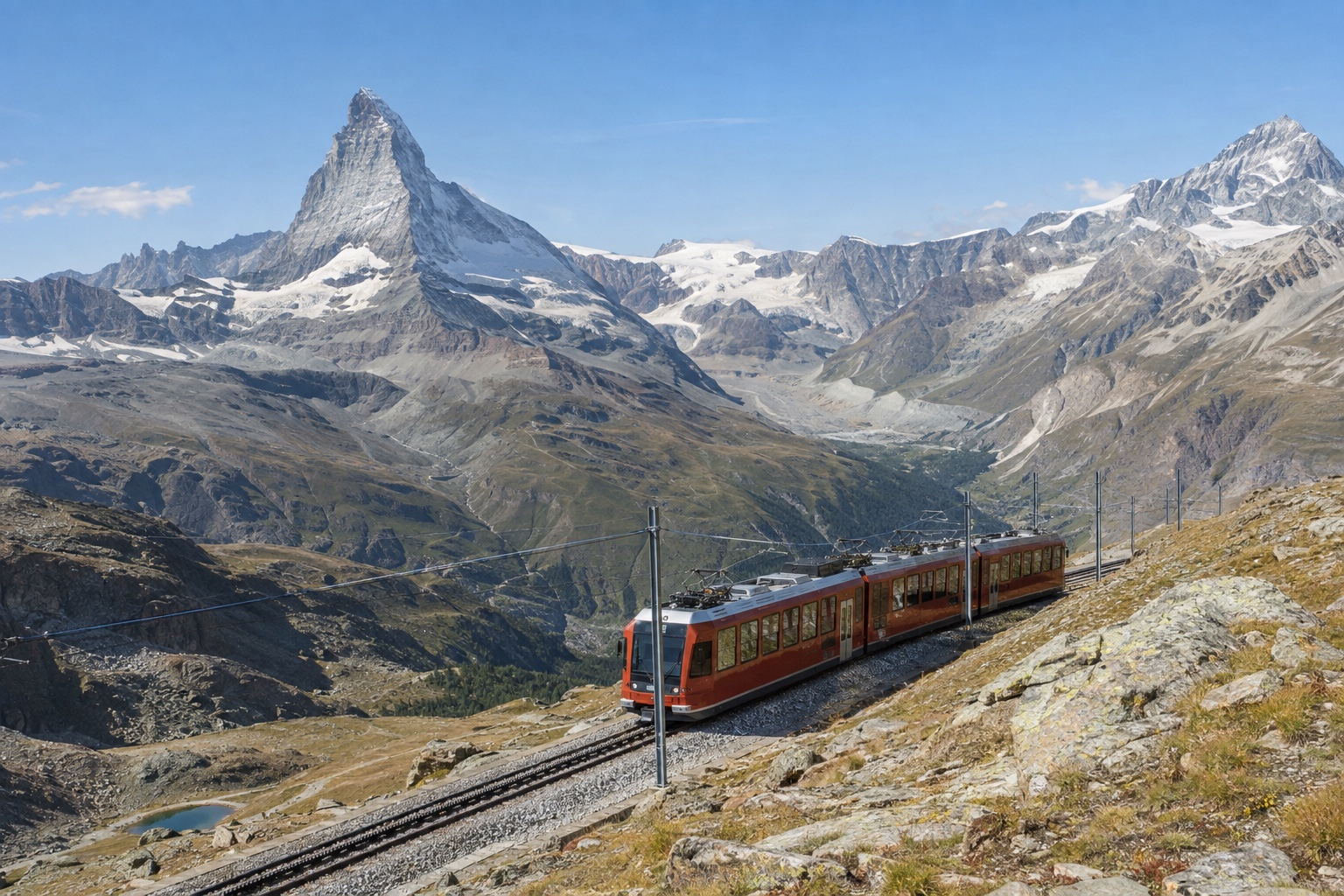
Gornergrat cogwheel railway train ascending with the Matterhorn visible across the valley

Gornergrat Railway

Switzerland's first electric cogwheel line, open since 1898, still climbing the same 9.3 km of open-air track to 3,089 m — the widest panoramic view in the valley.

Summit3,089 m
See the full ride →
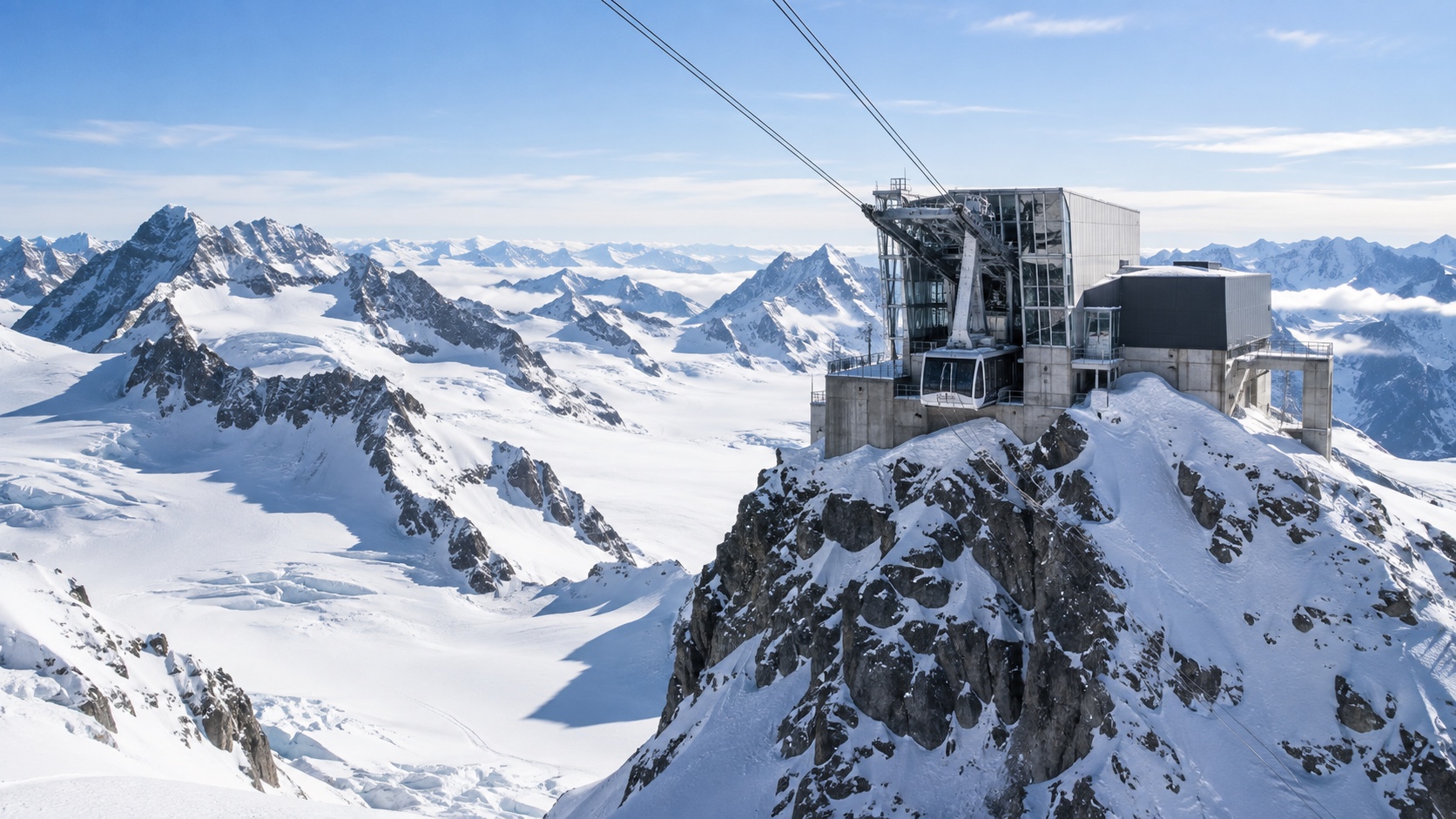
Matterhorn Glacier Paradise cable car station on the Klein Matterhorn glacier, Europe's highest cable car station

Matterhorn Glacier Paradise

Europe's highest cable car station, 3,883 m up, closest lift-served view of the peak itself.

Summit3,883 m
Plan the ride up →
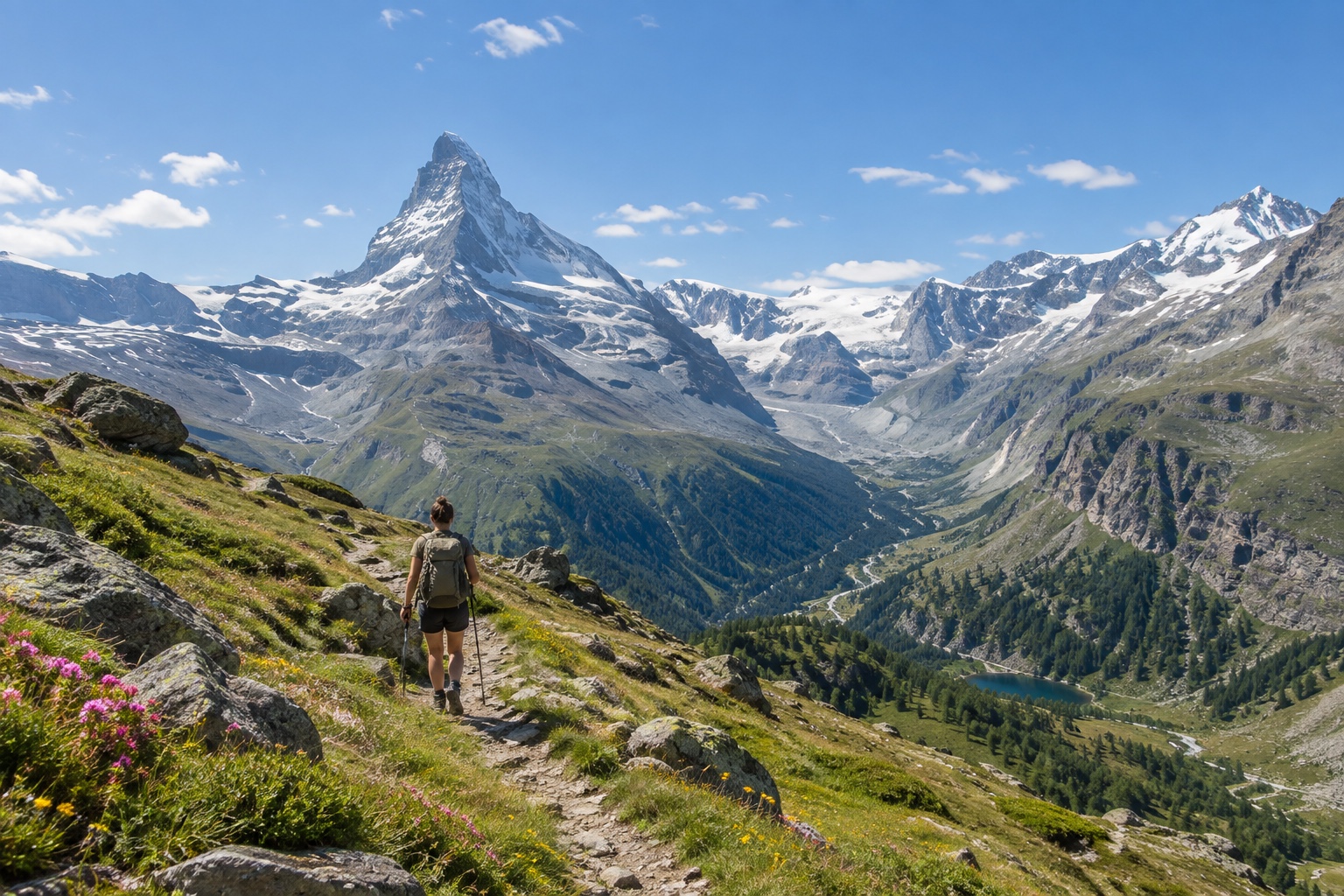
Hiker on a trail above Zermatt with the Matterhorn and Gorner Glacier in the background

Hiking on foot

400+ km of marked trail — the only way to actually stand still in front of the north face.

Trail network400+ km
Find a real route →
The mountain itself

What actually happened here in 1865

The Matterhorn was the last great Alpine peak to fall — not because it's the tallest (it isn't even the tallest in the Zermatt valley; that's the Dufourspitze), but because its four steep, near-symmetrical faces resisted every earlier attempt. Edward Whymper's party finally reached the 4,478 m summit on 14 July 1865, by the Hörnli ridge on the Swiss side.

The descent turned into one of mountaineering's defining tragedies: four of the seven climbers — Lord Francis Douglas, Charles Hudson, Douglas Hadow, and guide Michel Croz — fell to their deaths after Hadow slipped. Whymper and the two Zermatt guides, both named Peter Taugwalder, survived on a rope that snapped between them and the falling climbers. An inquiry later cleared them of any wrongdoing.

That first ascent turned Zermatt from a scattering of farming hamlets into one of the birthplaces of Alpine mountaineering tourism — the reason a village this remote ended up with a railway, then two cable cars, within decades.

Read the full first-ascent story →

Plan your own way in

Pick where you're starting from — the honest, current train timing follows.

Select your route

Your leg-by-leg journey will appear here.

Practicalities

Before you book anything

Zermatt elevation
1,604 m
Täsch shuttle
Every 20 min, 12 min ride
Täsch parking
2,100 spaces, from CHF 5

Skip the confusion: if you're arriving entirely by train from Zürich, Geneva, or Basel, you never touch the Täsch shuttle at all — the Matterhorn Gotthard Bahn train from Visp runs straight through to Zermatt. The Täsch shuttle only matters if you drove.

Full trip-planning checklist →
Where to sleep

Hotels, ticketed by valley

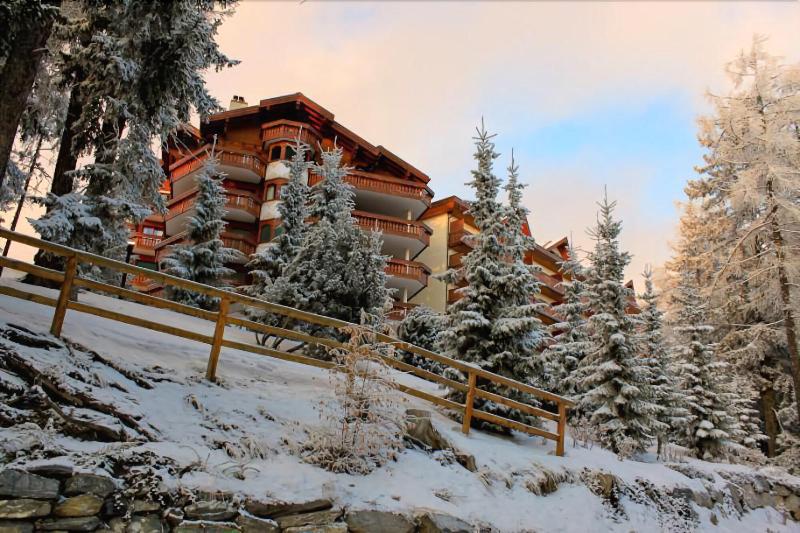
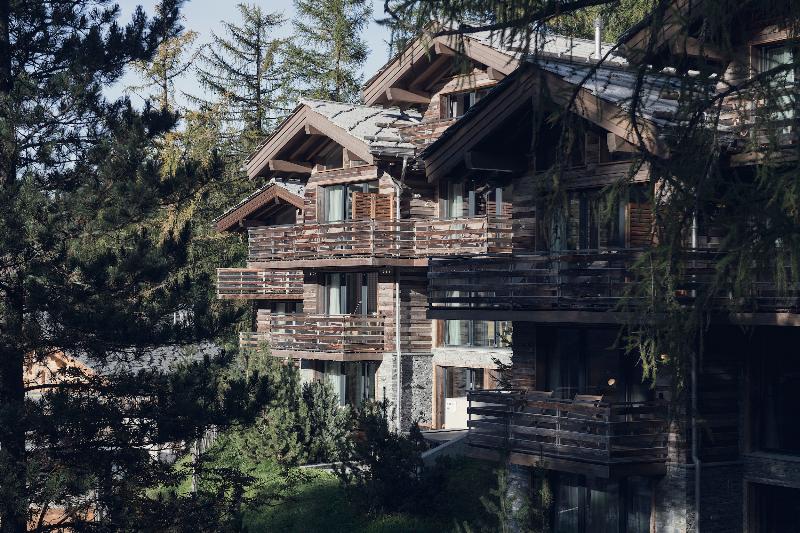
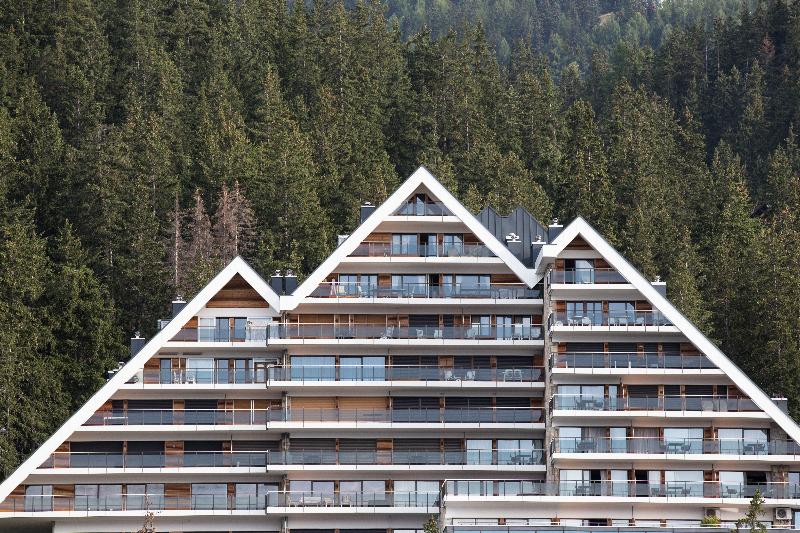
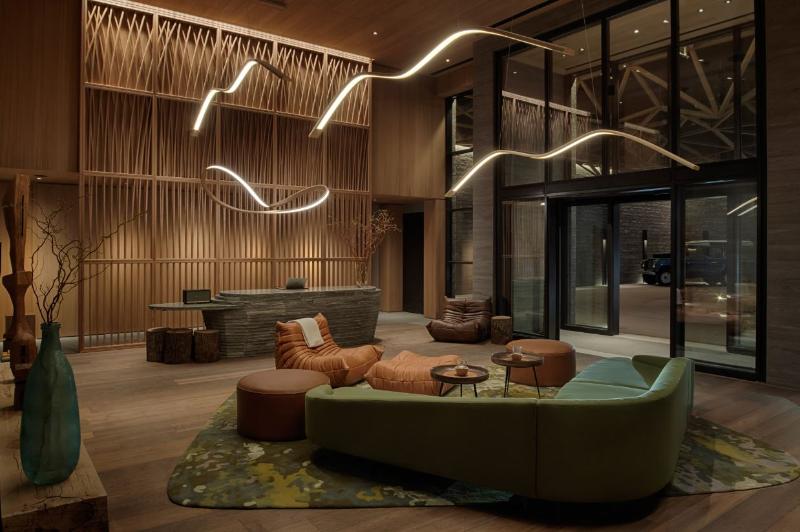
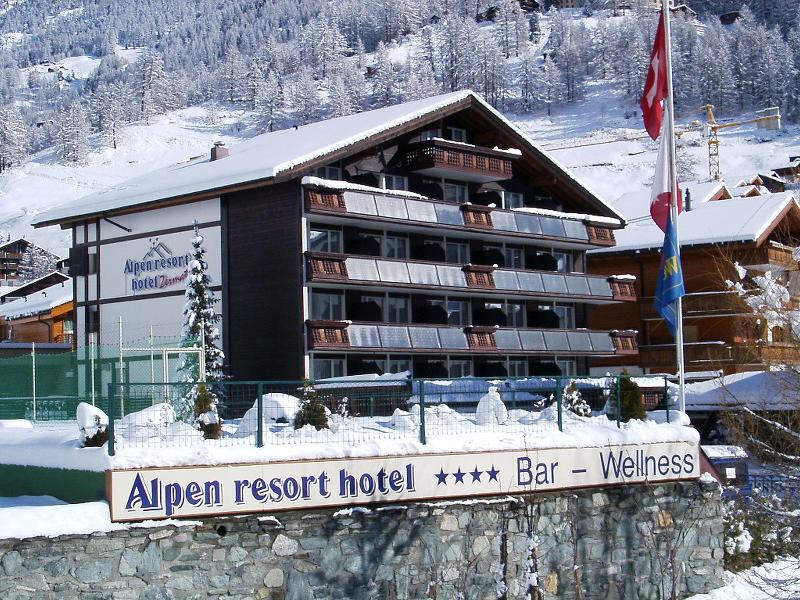
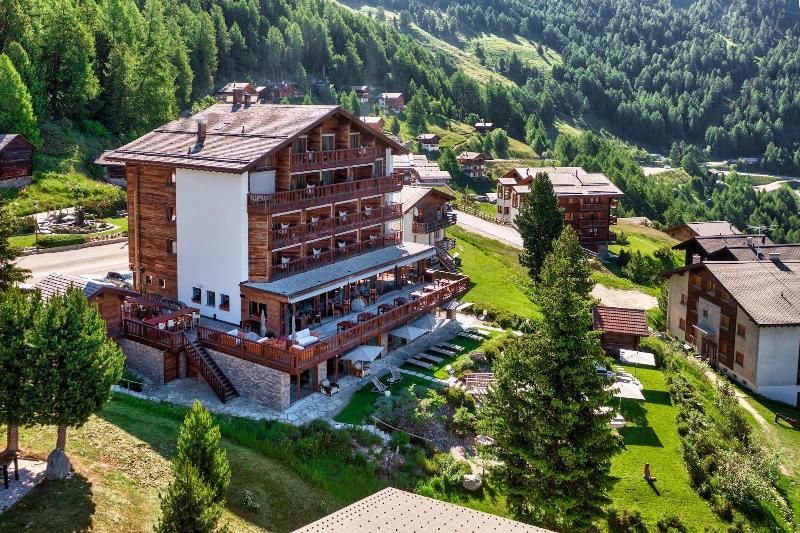
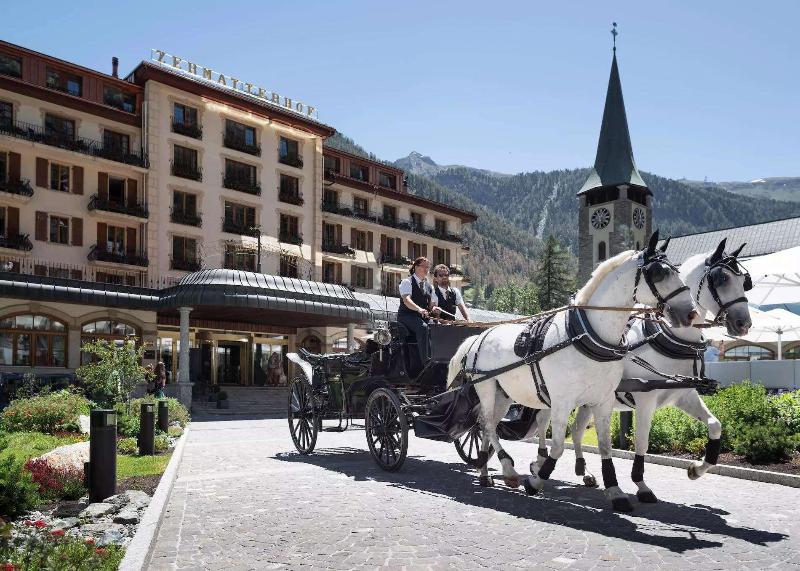
1,000 hotels from the Hotelbeds catalogue: 184 in Zermatt and the valley under the Matterhorn, and the rest across Switzerland. Search a name or village, open the filters for stars and facilities, and book directly with the hotel; we show no prices. Zermatt is car-free, so most guests arrive by the Täsch shuttle or the Matterhorn Gotthard Bahn and the hotel sends a porter or an electric taxi.

1,000 hotels across Switzerland

18 of 1000 shown

Descriptions and photos come from the Hotelbeds catalogue and are in English. Jeldavo is an information guide, not a booking site: it shows no live prices or availability. Check rates, tourist tax and cancellation terms directly with the hotel.